

AI Chatbot vs AI Voice Agent
Learn the key differences between AI Chatbots and AI Voice Agents. Discover which solution is right for your business and improve customer engagement.
Customer expectations have changed. People want quick answers whether they're browsing a website, sending a WhatsApp message, or calling a business. Slow responses can lead to lost opportunities.
To meet these expectations, businesses are increasingly adopting AI Chatbots and AI Voice Agents. While both automate customer interactions using artificial intelligence, they serve different purposes.
This guide explains the differences between the two and helps you choose the right solution for your business.
What Is an AI Chatbot?
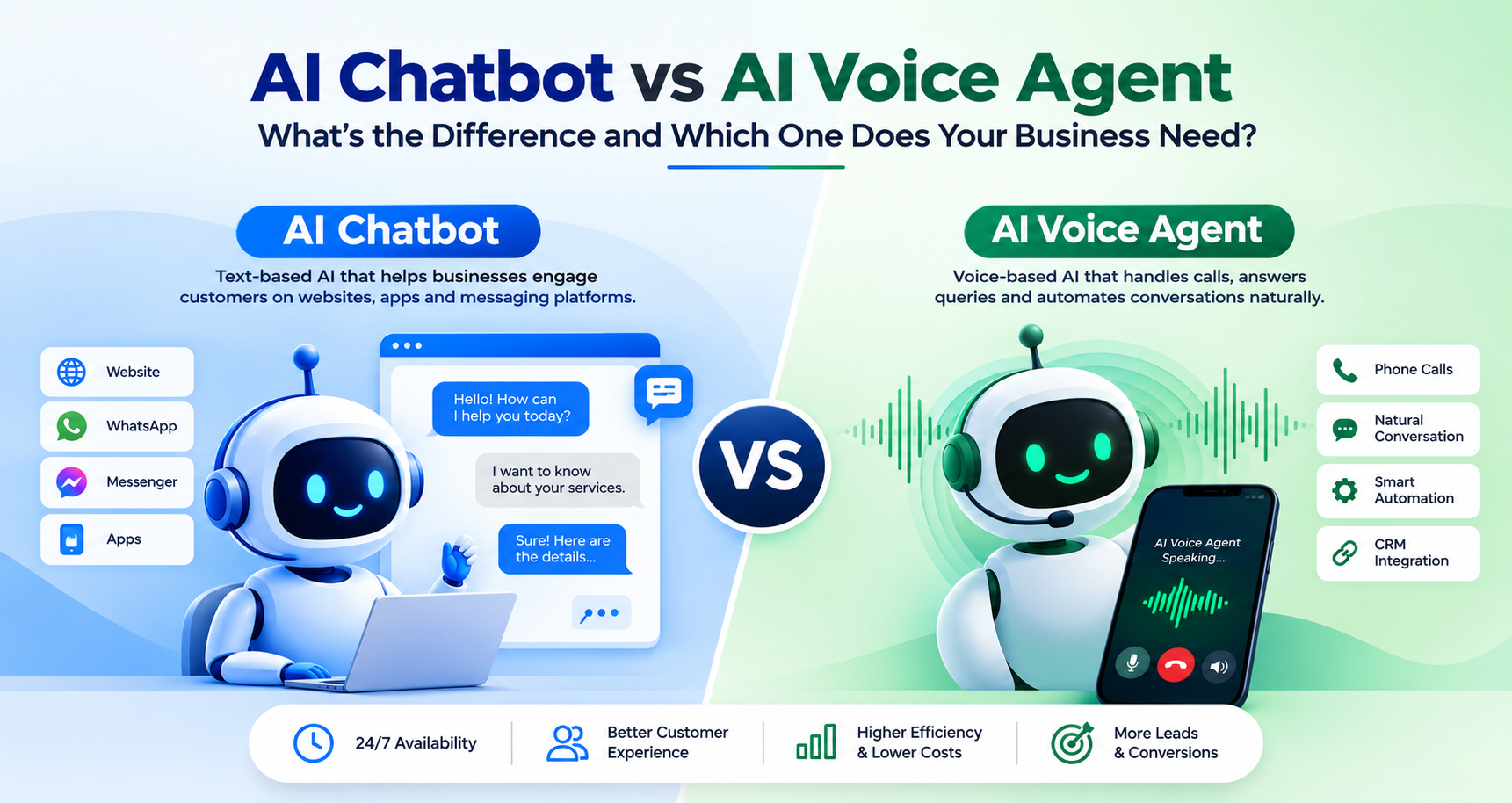
An AI Chatbot is a text-based virtual assistant that communicates with customers through websites, WhatsApp, mobile apps, and messaging platforms.
Modern AI Chatbots use Natural Language Processing (NLP) and Large Language Models (LLMs) to understand customer queries and provide accurate, human-like responses.
They are commonly used to:
- Answer FAQs
- Capture leads
- Book appointments
- Recommend products or services
- Provide customer support
- Share order updates
AI Chatbots are ideal for businesses that receive a high volume of online enquiries.
What Is an AI Voice Agent?
An AI Voice Agent is a conversational AI solution that communicates through natural voice over phone calls.
Unlike traditional IVR systems, AI Voice Agents understand spoken language and respond naturally, creating a more engaging customer experience.
They can:
- Answer calls 24/7
- Qualify leads
- Book appointments
- Route calls
- Integrate with CRM systems
- Support multiple languages
AI Voice Agents are best suited for businesses that receive frequent customer calls.
AI Chatbot vs AI Voice Agent: Key Differences
Both technologies automate customer interactions, but they differ in how customers communicate with them.
Communication
AI Chatbots interact through text on websites and messaging platforms, while AI Voice Agents communicate through natural voice during phone calls.
Best Use Cases
AI Chatbots are ideal for FAQs, lead generation, order tracking, and customer support. AI Voice Agents are better for handling phone enquiries, appointment scheduling, and sales conversations.
Customer Experience
Chatbots provide quick text-based assistance, whereas Voice Agents deliver a more natural, human-like conversation.
Availability
Both solutions operate 24/7, ensuring customers receive instant responses at any time.
Business Integrations
Both can integrate with CRM systems, calendars, and other business tools to automate workflows and reduce manual tasks.
How AI Chatbots Work
AI Chatbots use NLP, machine learning, knowledge bases, and AI models to understand customer questions and provide relevant responses in real time.
How AI Voice Agents Work
AI Voice Agents combine speech recognition, natural language understanding, and AI models to answer calls, understand requests, and complete tasks such as booking appointments or qualifying leads.
Which Solution Is Right for Your Business?
If most customer enquiries come through your website or WhatsApp, an AI Chatbot is the right choice.
If your business receives a large number of phone calls, an AI Voice Agent can automate conversations and improve response times.
Many businesses use both together to create a seamless customer experience across digital and voice channels.
Conclusion
AI Chatbots and AI Voice Agents both help businesses improve customer engagement, reduce response times, and automate repetitive tasks.
The right choice depends on how your customers prefer to communicate. For many businesses, combining both solutions delivers the best results.
If you're looking to implement AI automation, The Dievision can help you choose and deploy the right solution for your business.
Explore our AI Automation services:
🌐 https://www.thedievision.com/ai-automation